

From historic milestones and inspiring initiatives to controversial decisions and troubling setbacks, 2026 was an eventful year for LGBTQ+ communities across Quebec and Canada. For the 31st consecutive year, Richard Burnett looks back at the people, organizations and institutions that made headlines, for better or worse, celebrating progress while calling out those who stood in its way. Here are his Heroes and Zeroes of 2026.
ZERO — Quebec’s Ministry of Education, which, on January 1, ordered that schoolteachers be addressed only as Mr. or Ms., much to the dismay of non-binary educators. The CAQ government also banned the use of the French pronoun iel(they), Mx, toustes and celleux, as well as abbreviated gender-inclusive forms such as administrateur/trice, agent.e.s and étudiant.e.s.
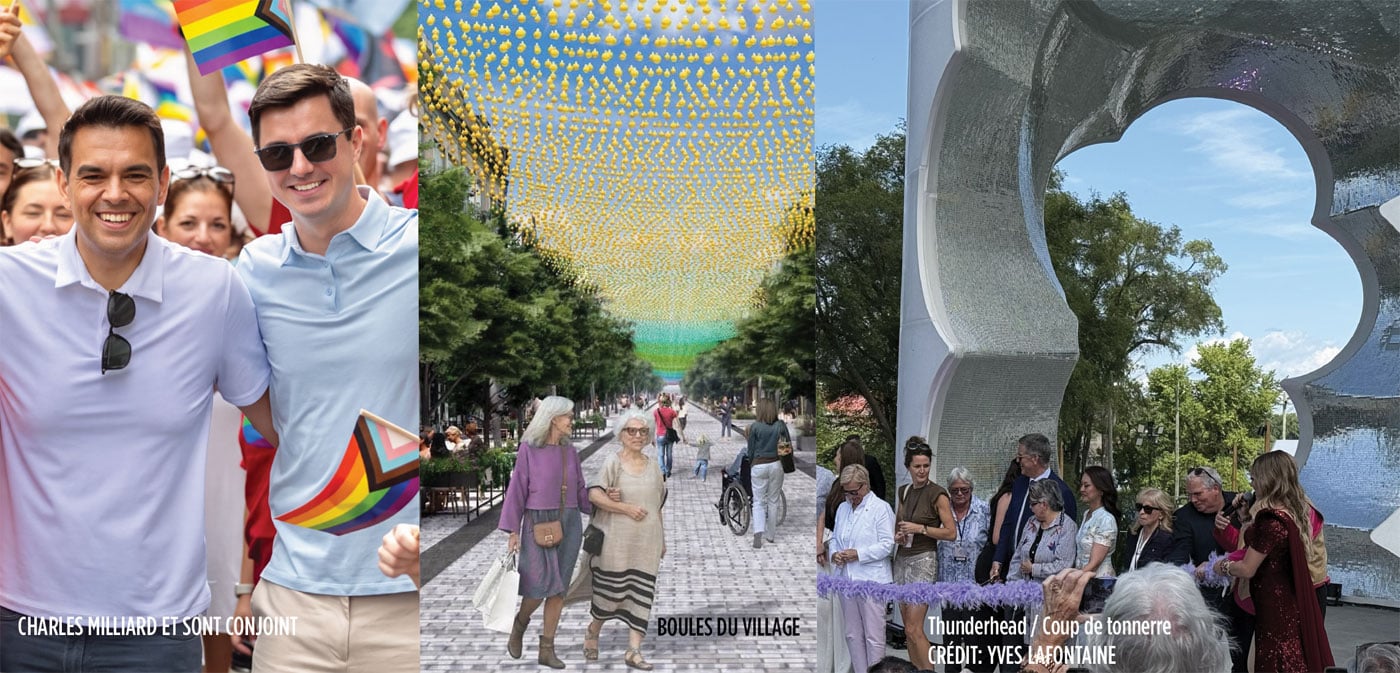
HERO — Charles Milliard, who was named leader of the Quebec Liberal Party on February 13. The 46-year-old former president of the Fédération des chambres de commerce du Québec is the party’s first openly gay leader.
ZERO — Eighteen-year-old trans woman Jesse Van Rootselaar, who shot and killed eight people, including six children, in Tumbler Ridge, British Columbia, on February 10. Twenty-seven others were injured. Van Rootselaar then died by suicide.
HERO — UQAM political science professor Francis Dupuis-Déri, whose study Enseigner à l’école au Québec face à la misogynie, l’antiféminisme, l’homophobie et la transphobie, published on February 23, documents the rise of misogynistic, antifeminist, homophobic and transphobic discourse and behaviour in Quebec’s elementary and secondary schools.
HERO — Gay Line/CAEO Québec, which marked 50 years of volunteer-led services supporting Quebec’s English-speaking LGBTQ communities on September 18. Its work includes workshops in English-language schools, CEGEPs, universities, workplaces and community organizations.
HERO — Canada’s May 2026 long-form census, which, for the first time, asked Canadians about their sexual orientation. Respondents could identify as heterosexual, lesbian or gay, bisexual or pansexual, or provide their own response.
HERO — Canadian Prime Minister Mark Carney, who unveiled the Ministerial Advisory Council on Rights, Equality and Inclusion on June 1. Chaired by Canadian Identity and Culture Minister Marc Miller, the council will address antisemitism and other forms of hate.
HERO — Canada Post, which issued four new Places of Pride stamps on June 4, honouring Little Sister’s Book & Art Emporium in Vancouver, the 1978 Metamorphosis festival in Saskatoon, The 519 community centre in Toronto and The Turret gay and lesbian club in Halifax.
HERO — The inaugural Chez Nous / Our Place: African and Newcomer Pride celebration in Ottawa, held from July 24 to 26.
HERO — Vancouver City Council, which voted unanimously on June 3 to provide $75,000 to the cash-strapped Vancouver Pride Society, whose Pride parade took place on August 2.
HERO — The City of Montreal, which announced on August 6 that landscape architect Claude Cormier’s famed Les Boules du Village rainbow installation will return in 2030, between St. Hubert and Papineau streets, once construction along that stretch of St. Catherine Street is completed.
HERO — The LGBT Purge Fund, which funded Thunderhead, the national monument inaugurated in Ottawa on August 21. Standing 11 metres tall, the monument commemorates the historic discrimination faced by LGBTQ communities in Canada, particularly during the Canadian government’s decades-long campaign of persecution known as the LGBT Purge.
HERO — The Saddle Lake Cree Nation, which announced on September 9 that it would defy Alberta Premier Danielle Smith’s government by establishing a safe haven for gender-affirming medical care. The initiative challenges provincial legislation prohibiting doctors from prescribing puberty blockers or hormone therapy to transgender and gender-diverse children under 16. Smith’s United Conservative Party government invoked the Canadian Charter’s notwithstanding clause to shield the legislation from court challenges. The Saddle Lake Cree Nation maintains that access to health care is a treaty right and falls under its inherent jurisdiction.
HERO — Legendary Toronto LGBTQ Latino nightclub El Convento Rico, which closed on October 1 after 35 years.
HERO — Montreal’s first women’s sports bar, Le Nadia, which closed on May 1 following noise violations but reopened on June 4 as an outdoor guinguette called Le Jardin des Roses par Le Nadia, in Hochelaga-Maisonneuve.
HERO — The Canadian federal government, which in its 2026 budget tabled on November 4 pledged $60 million in new funding for the Federal 2SLGBTQI+ Action Plan. Beginning in 2027–28, this four-year-plan will spend $15 million annually to support community organizations, public awareness initiatives, research and projects advancing LGBTQ equality and inclusion across Canada.
HERO — The Parti Québécois government which on October 21 named MNA Marie-Claude Sarrazin as Minister Responsible for Combating Discrimination Against LGBTQ+ People.