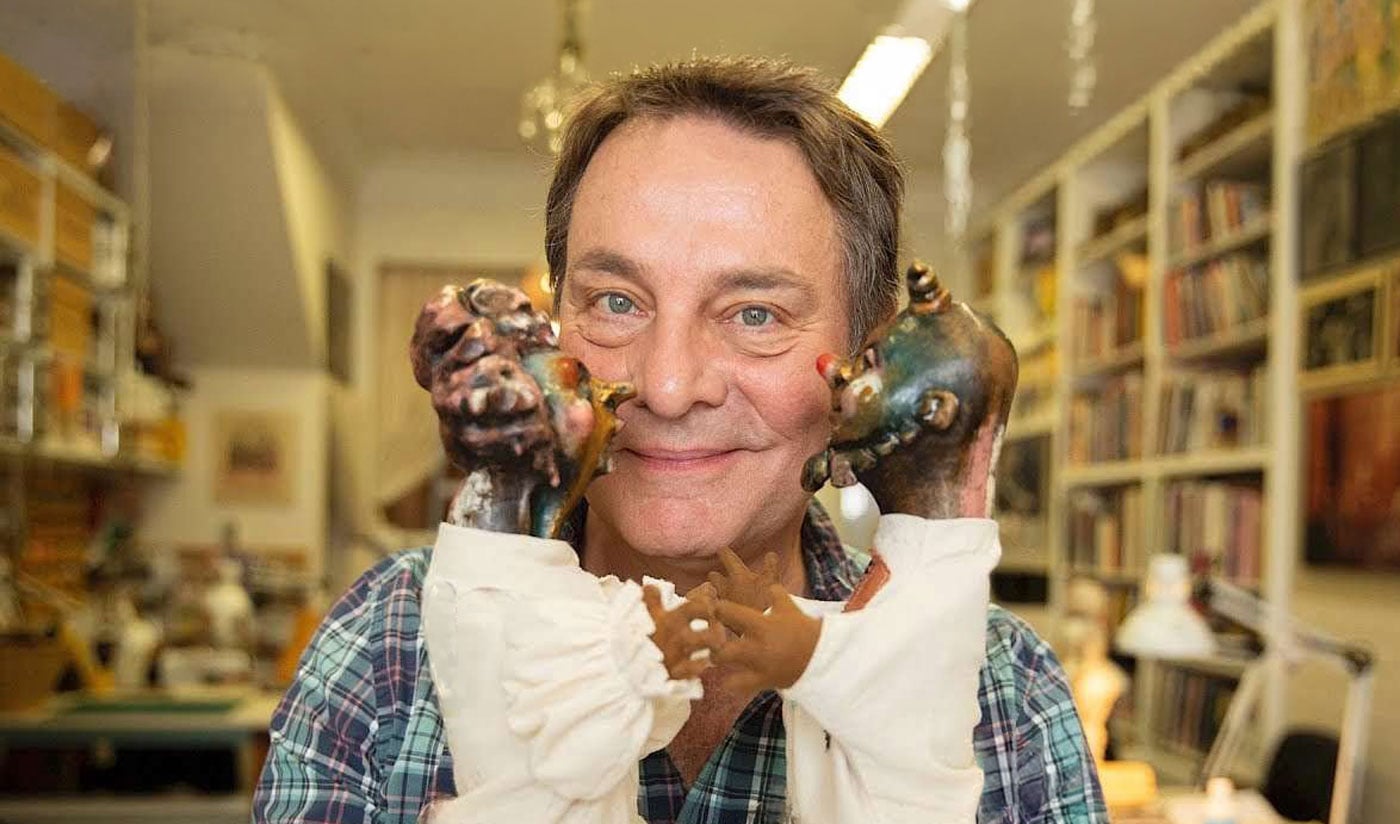

Ronnie Burkett is one of the great puppeteers of his generation. Raised in Medicine Hat, Alberta, Burkett won – at age 22 – a 1979 Emmy Award for creating the puppets on the PBS show Cinderrabbit, before forming the Ronnie Burkett Theatre of Marionettes in 1986 to produce satirical works for adult audiences. The rest is history.
Toronto-based Burkett has won a ton more prestigious awards since, and was named an Officer of the Order of Canada in 2019. The Canadian national treasure returns to Montreal with Wonderful Joe which opens at the Centaur Theatre on October 13.
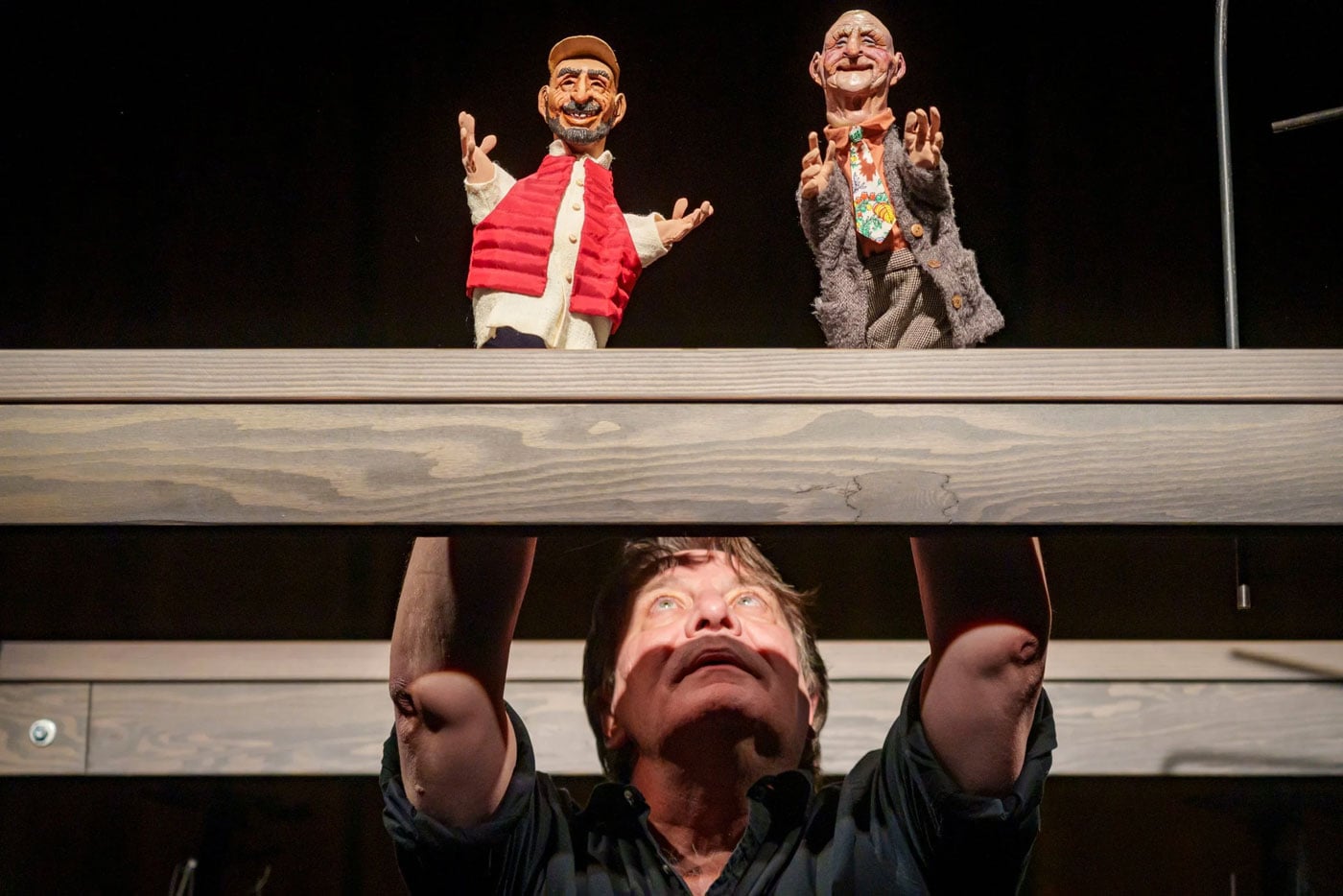
Wonderful Joe follows an aging gay man and his elderly dog as they take a final lap of their beloved yet gentrifying neighbourhood after they’re evicted from their long-time home. The acclaimed production touches on some serious issues affecting aging LGBTQ+ communities, all told with Ronnie’s trademark campy wit and style.
We recently sat down for a candid Q&A.
Wonderful Joe is about gentrification that forces the tenants out of Joe’s apartment building to make room for a new condo tower.
Ronnie Burkett: I got this idea of an elderly queer man unable to live on his own anymore. He was to be put in a home without his dog who would be sent to a shelter. Because I tour, I am always housed in city centres, and what I started noticing in so many cities was shocking to me, even in Montreal: “What are all these condos? It’s starting to look like Toronto.” Beloved old neighbourhoods are being gentrified or torn down. That’s where my story came from. Joe is an old guy who goes on one last grand walk around his neighbourhood.
Does Joe being an elder gay play a part in your new show?
Ronnie Burkett: Right at the beginning when he’s saying goodbye, a neighbor says, “Oh, you’re as queer as a Three Dollar Bill.” But Joe mostly passes under the radar on many levels: he’s low income, elderly and queer. Nobody really notices him. So it makes him an observer. And as we go on his journey, we meet a trans sex worker, and we see a flashback of Joe’s early life when he was a teenage hustler. Joy is his modus operandi, so Joe feels no shame about any part of his life.
How did your own life experience surviving the devastating early years of AIDS inform this aspect of Joe’s life and character?
Ronnie Burkett: I just got goose flesh. Not many people ask me about those days anymore. For those of us who survived it, we hold the responsibility of bearing witness. I’ve always been hyper-aware of that, and while I think it is easy to complain about age as we get older, I’m always mindful not to celebrate too loudly that I made it through, on behalf of so many beauties who did not. I don’t honestly believe there was a queer community before AIDS. As you know, we were separate. Dykes and fags did not commingle. But with AIDS a disparate group of queer people came together with a common purpose, and that was the first time I ever really felt community. I think that’s part of Joe in his wanderings.
Joe meets a wonderful cast of characters, including a trans sex worker. How does your play explore friendship, loyalty, and the importance of supporting marginalized people?
Ronnie Burkett: These are unapologetic characters. They claim their turf. This is their home. They’re very funny as well. Some of the stories that the characters recount are actually stories I’ve heard from people working the front lines on the street.
Joe is a rare voice of queer eldership. How does Wonderful Joe touch on ageism in the gay male community?
Ronnie Burkett: It doesn’t do so directly, but by making the most beloved, most charming and magical character in the play an elderly gay man, I think that speaks volumes to young queers.
You are 69. How has ageism affected you?
Ronnie Burkett: I’ve had young theatre artists say to my face, “Okay, you’ve had your turn. It’s our turn.”
How about nightclubbing?
Ronnie Burkett: I don’t go out much anymore. I remember when a younger friend would call at 11 p.m. or midnight to meet him at a club. I finally had to sit him down after months of this and say, “You do not contact men of our age in the spur of the moment. We need three days of prep!” We don’t fluff quickly anymore.
My gay reference point for marionettes was Wayland Flowers and Madame. About whom you have a great story.
Ronnie Burkett: When I was 19 I was lucky enough to get hired in New York for Bil Baird, the man who did The Sound of Music marionettes. I would walk past The Stonewall Inn each morning on my way to work! Anyway, Bil Baird and (his son) Peter and I became very, very close, and Peter and his then-girlfriend knew Wayland, and Wayland was doing a show at some cabaret club up on the Upper West Side, and they said, “Come on, you got to see this guy.” So off we go.
Well, the show changed my life. I’d never ever seen anybody doing like that with puppetry. I’d never seen anybody doing that kind of adult work. It just exploded my brain. And no matter what Waylon was as a person – you know, a bitchy Southern Queen – he was an absolute genius. So they said, “Let’s go backstage to see him.” I was so excited. I had so many questions for him. And when they introduced me, Waylon turned, looked me up and down and said, “Didn’t I rim you in a hallway?” That was my interaction with Waylon!
I’ve seen pictures of you as a young man. You were such a twink!
Ronnie Burkett: I was!
When Wayland Flowers spotted you, he surely went, “Wow!”
Ronnie Burkett: Funny, Waylon’s ex-boyfriend was a French interior designer whom I also met through Peter Baird. He hired me to work at cocktail parties at his house and empty ashtrays. In the mid-70s that was like 50 bucks a night. That was gold. All I had to do was circulate, take glassware, put it in the kitchen and clean ashtrays. And I think there was an expectation that I would stay the night after the guests left. When the guests all left, I would say, “Okay, I’m all cleaned up. Anything else?” He’d look at me and go, “You are so sweet” and give me the money, and off I’d go. Had I been a different guy, I probably would have had a different experience.
Are you excited to return to Montreal? Because we’re excited to see you again!
Ronnie Burkett: Yes I am! And I’m thrilled I’m not there in the dead of winter. Seriously, I’m always there in like fucking February!
How do you feel when people call you a living legend – because you are, Ronnie.
Ronnie Burkett: Well, I’m just like everybody else in the arts. I’m still working. One thing we’re working on in the studio right now is building 11 new characters for the Daisy Theatre because this season is the 40th anniversary season of Theatre of Marionettes.
But I’ll tell you something that’s not fully formed yet. I always assumed my whole life that I would keep working until I just fell over and died. The joke has always been I would die with a puppet in my hand. But I think I’ve got one last big show built in me because my team – my core team – has been with me 40 years. My little team is making noises about it’s time to retire. And I thought, “These people are irreplaceable to me at this point in my career. I don’t want to find a new this or a new that.”
So I said, “Hey guys, what if we build one last epic big show? Because I’ve got a really good idea in mind. And why don’t we take two years to build it instead of one, so that we actually sleep and rest and have weekends.” So that’s kind of the plan: to make one more big epic show. The working title is Sissy Geppetto Saves the World.
Then with the Daisy Theatre and Little Dickens and Little Willie and Wonderful Joe, I’ve got enough in rep that I can go for another decade. So that’s kind of the plan.
I’m thrilled to see young puppeteers honour you as a queer trailblazer.
Ronnie Burkett: Young puppeteers do tell me, “When I saw you 25 years ago, you were unapologetically queer onstage.” They thank me and that feels good because in the old days we weren’t invited to be that queer. There was only a handful of us in the theatre in this country who decided we were going to be that loud. I don’t think I could have done it any other way.
INFOS | Wonderful Joe runs at the Centaur Theatre from October 13 to November 1.
Info and tickets: https://centaurtheatre.com